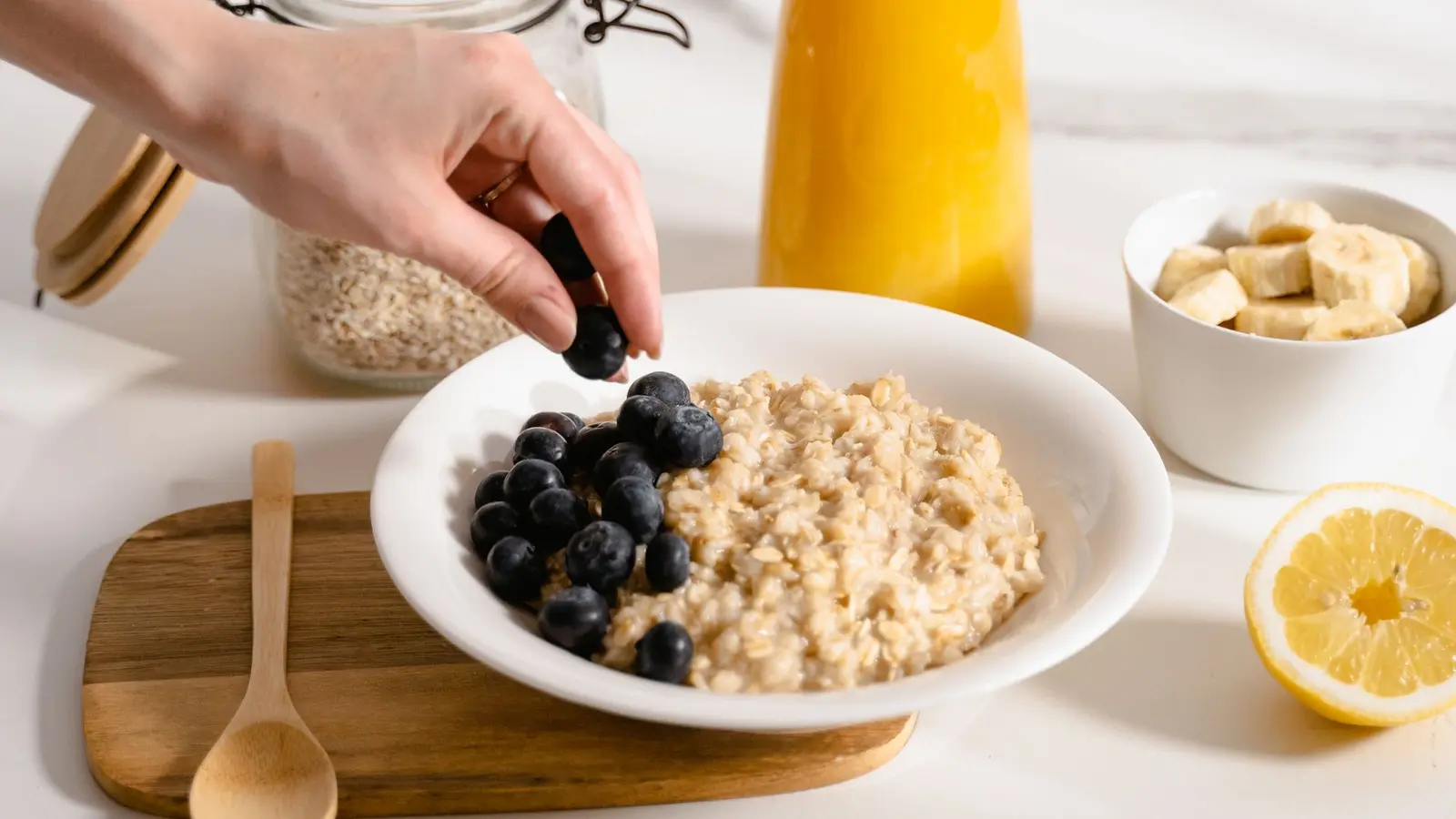
On a busy morning, breakfast needs to fit the kitchen and the time you have. Overnight oats suit a fridge at home or work; eggs and rice make sense when you want something warm; tofu gives you a savoury option without dairy or eggs.
These three combinations use a short shopping list. Choose one you would happily eat again, then adjust the portion to your appetite. The protein figures below are estimates for the stated ingredients, not a target every breakfast has to reach.
Three breakfasts to choose from
The portions are a starting point. Vegetables, seasonings, cooking oil and extra toppings are additional to the figures shown.
| Breakfast | Portion used for the estimate | Estimated protein | Estimated energy |
|---|
| Yogurt, oats and banana | 40 g dry oats, 200 g plain low-fat Greek yogurt, 100 g peeled banana | 26.3 g | 387 kcal |
| Eggs, rice and edamame | About 2 large hard-boiled eggs, shelled weight 100 g; 100 g cooked rice; 100 g cooked, shelled edamame | 27.2 g | 406 kcal |
| Tofu and edamame rice bowl | 200 g regular tofu before heating, 100 g cooked rice, 50 g cooked, shelled edamame | 24.8 g | 343 kcal |
Yogurt, oats and banana for a morning without cooking
Stir the oats into the yogurt in a container with a lid. Add a splash of water if the mixture is too thick, then refrigerate overnight. Slice the banana over it when you are ready to eat. Keeping the fruit separate makes the container easier to pack and stops the banana sitting in the mixture all night.
Use plain rolled or quick oats rather than assuming a sweetened instant sachet has the same ingredients. If you prefer warm oats, cook them according to the pack and have the yogurt and fruit alongside.
The yogurt makes a big difference to the protein total. The estimate uses plain low-fat Greek yogurt. A small pot of ordinary yogurt or a sweetened Greek-style dessert can give a different result; use the protein figure on your own tub. Berries, nuts and granola can make a good topping, but they are extras to the banana-only calculation above.
Eggs, rice and edamame when you want something warm
This is easiest when the rice and hard-boiled eggs are already prepared and properly chilled. Cook the edamame according to its packet, reheat the rice thoroughly, and serve with the eggs. Add cucumber, tomatoes or another vegetable you enjoy.
The two eggs are a convenient way to picture the portion; their actual size varies. For the edamame, count the beans you eat, without the pods. A bag weighing 200 g with pods will not give you 200 g of edible beans.
Tofu and edamame rice bowl for a savoury plant-based option
Heat plain tofu and cook the edamame as directed on their packets. Serve over warm rice, with chopped spring onion or vegetables if you like. Keep sauce on the side so you can add the amount you want.
The estimate uses regular tofu, which provides less protein per 100 g than the separate firm-tofu reference in our food and portion guide. Check the product you buy: a firmer texture alone does not establish its protein content. Frying the tofu or adding oil changes the energy total.
You can use the same rice and edamame for the egg breakfast on another day, so choosing these options does not require two completely different shopping trips.
Shopping for the ingredients in Vietnam
Look for yến mạch for oats, sữa chua Hy Lạp for Greek yogurt, trứng for eggs, and đậu phụ or đậu hũ for tofu. Edamame is also sold as đậu nành Nhật.
For an example of the range available, Nam An Market's yogurt section includes ordinary yogurts and Greek-style fruit pots in different sizes. Compare protein per 100 g first, then check how much is in the whole pot. The words không đường describe sugar, not the protein amount.
Annam Gourmet's frozen-vegetable range lists Emborg edamame in a 400 g pack. Check whether your chosen bag contains shelled beans or pods, and check availability for your delivery area. Fresh fruit and eggs can also be bought separately in the quantities you need.
Make preparation easier
Start with one breakfast for the next morning. Put the oats and yogurt together after dinner, or prepare the ingredients for a warm bowl while you are already cooking. Choose a container that closes properly if breakfast is travelling with you.
Keep yogurt, tofu and cooked ingredients refrigerated. If you carry them to work, use a cold bag that keeps the food cold until it can go into a fridge. FDA guidance recommends refrigerating perishable food within two hours, or within one hour above about 32°C, and reheating leftovers to 74°C. Safe food handling
If you would rather buy phở or bánh mì, you do not need to replace a breakfast you enjoy with one of these bowls. Ask about the meat, egg or tofu portion and use the vendor's information where available; a single protein figure cannot describe every bowl or sandwich.
Understanding the estimates
The table uses USDA reference records for dry oats, plain low-fat Greek yogurt, banana, hard-boiled eggs, cooked rice, prepared edamame and regular tofu. Ingredient contributions are added before rounding.
Use your package's label when you have one. You can follow the meal ideas without weighing every ingredient; the listed weights are there when you want to reproduce or adjust the calculation. For advice on your total daily intake, see our protein guide for gym training.
Photo: MART PRODUCTION / Pexels. The photograph illustrates a breakfast setting; the table counts only the ingredients listed for each combination.