
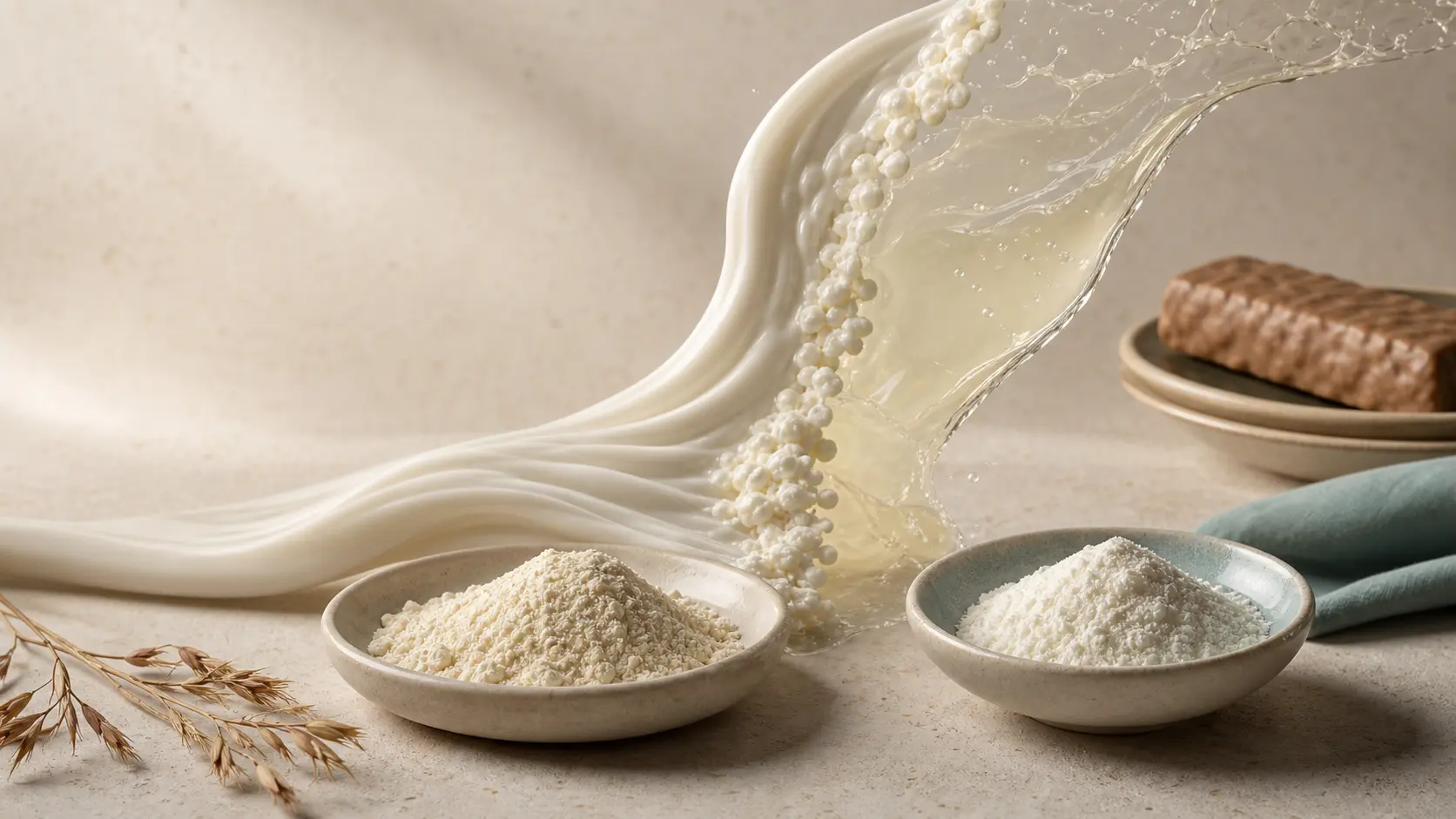
Whey gets most of the attention in sports nutrition. But when Yobeve designed a soft, coated protein bar, milk protein concentrate (MPC) was the stronger foundation for the product we wanted to make.
MPC keeps milk's natural combination of roughly 80% casein and 20% whey. It supplies all nine essential amino acids while also bringing the body and moisture-management properties that matter in a soft bar.
MPC vs whey at a glance
| Milk protein concentrate (MPC) | Whey protein | |
|---|---|---|
| Made from | Filtered milk | The whey fraction separated from milk |
| Protein profile | Roughly 80% casein and 20% whey | Primarily whey proteins |
| Key formulation strength | Adds body and helps manage moisture | Commonly chosen for solubility |
| Often used in | Protein bars, high-protein foods and dairy drinks | Shakes, powders, drinks and bars |
Both are high-quality dairy proteins. The difference is not “good versus bad”; it is what each ingredient brings to the finished product.
What is milk protein concentrate?
MPC is produced by filtering milk to concentrate its protein while removing some water, lactose and minerals. Unlike whey concentrate or isolate, MPC retains both of milk's main protein fractions in their natural balance.
That gives MPC three advantages that fit Yobeve especially well:
- Complete protein: it provides all nine essential amino acids.
- A natural casein-and-whey mix: one ingredient brings both milk-protein fractions.
- Useful bar functionality: it adds body and helps control moisture in a soft formulation.
Why MPC works so well in a soft protein bar
Protein in a bar has two jobs. It must deliver meaningful nutrition, and it must help create a product that still tastes and feels good when you eat it.
MPC works with the bar's moisture, fibre, fats and coating to support a full, soft texture. That functionality is a major reason Yobeve could build a coated bar with 15–18.5 g of protein without treating texture as an afterthought.
Whey remains an excellent choice for many shakes, powders and drinks. For Yobeve's format, MPC offered the combination of complete milk protein, body and water binding that the recipe needed.
The protein-quality advantage
MPC also performs strongly when researchers compare digestible essential-amino-acid quality. In a 2017 peer-reviewed study of eight dairy and plant protein ingredients, the MPC sample achieved the highest DIAAS result in the group:
| Ingredient tested | DIAAS |
|---|---|
| Milk protein concentrate | 120 |
| Whey protein concentrate | 107 |
| Whey protein isolate | 100 |
| Soy protein isolate | 84 |
| Pea protein concentrate | 62 |
That head-to-head result shows how strong MPC can be as a complete-protein foundation. The score belongs to the specific ingredients tested, but the comparison is a compelling illustration of MPC's essential-amino-acid quality.
Casein and whey bring different strengths
Human research comparing isolated milk proteins found a faster rise in blood amino acids after whey and a slower, more sustained response after casein. MPC naturally contains both protein fractions rather than relying on whey alone.
This does not make MPC “better whey.” It makes MPC a different, highly useful milk-protein ingredient—and the right choice depends on the food being created.
Where collagen fits
MPC supplies most of the protein in every Yobeve bar and provides the complete essential-amino-acid foundation. Hydrolysed collagen contributes its own characteristic amino-acid profile and plays a separate role in the soft-bar formulation.
The ingredients are there for different reasons: MPC is the nutritional foundation, while collagen complements the formula.
What this delivers in each Yobeve bar
| Flavour | Protein per 50 g bar | Nutrition highlights |
|---|---|---|
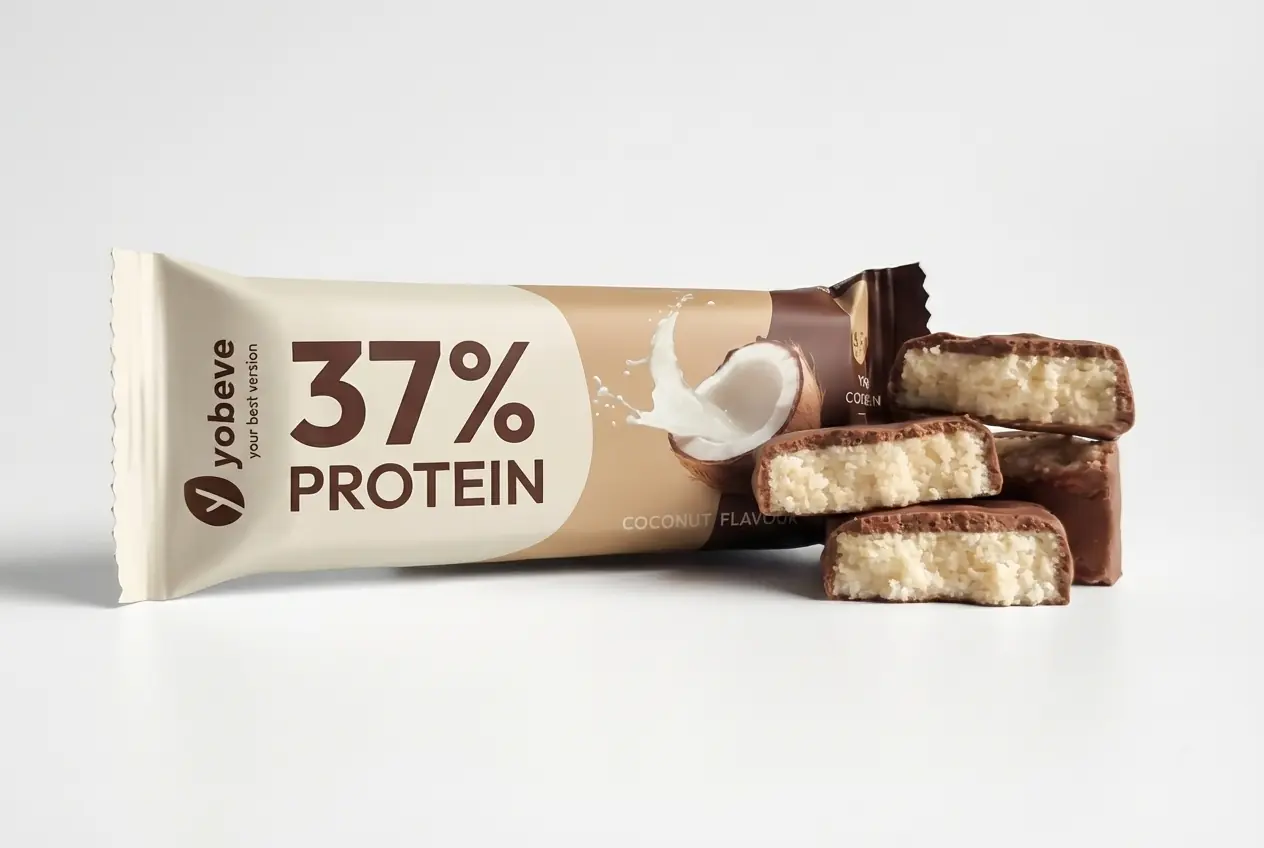
| Coconut | 18.5 g | 205 kcal; 2.0 g sugars; no added sugar |
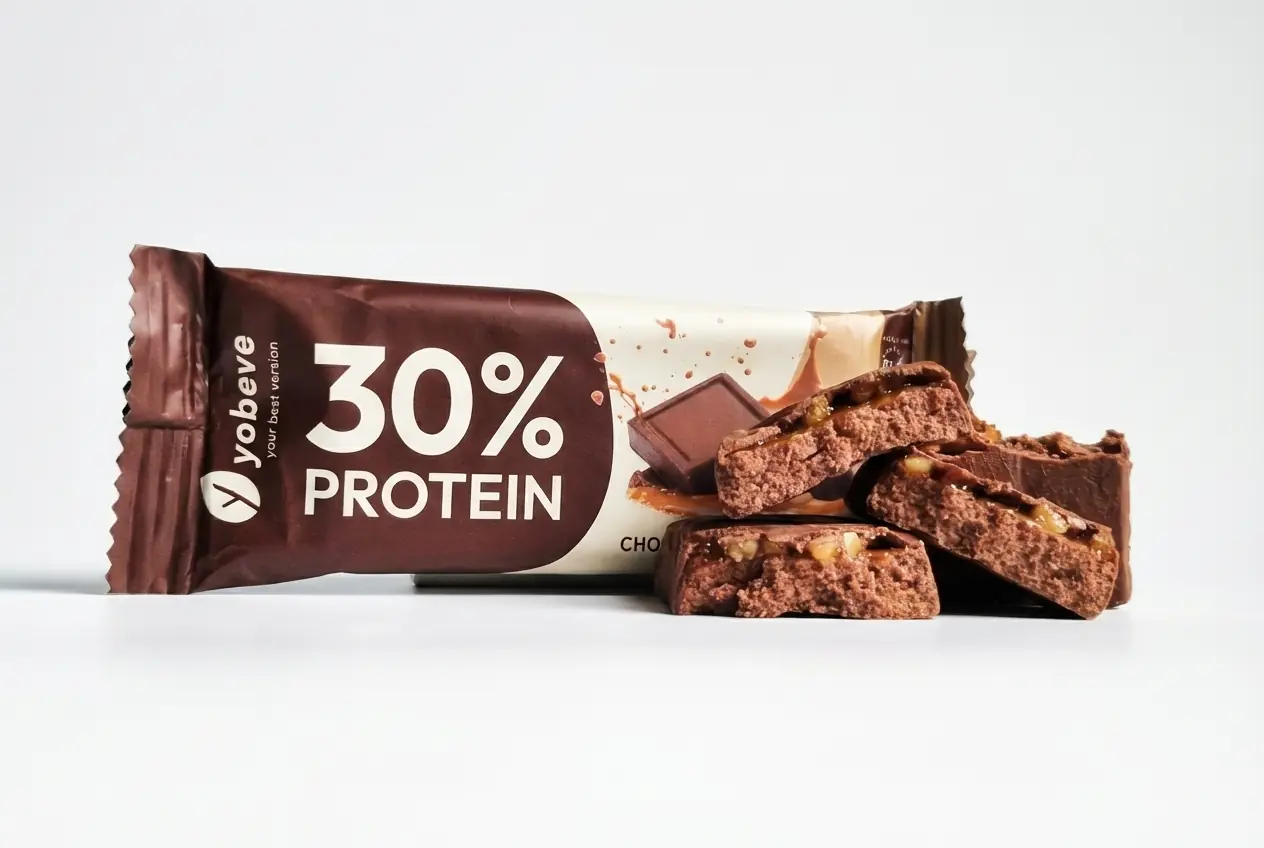
| Chocolate Caramel | 15 g | 205 kcal; 2.1 g sugars; no added sugar |
Bottom line
Yobeve chose MPC deliberately. It combines casein and whey, delivers complete milk protein and brings the functional strength needed for a soft, coated bar. Whey is famous; MPC is what made the Yobeve bar possible.
Yobeve
Compare Yobeve protein bars
Chocolate Caramel pairs a chocolate-caramel profile with peanut crunch; Coconut combines a creamy coconut flavour with grated coconut. Both have a milk chocolate coating and no added sugar.
Author

Josef Andre
Founder at Yobeve
Josef Andre is the founder of Yobeve. Originally from Austria and living in Vietnam since 2019, he created Yobeve to bring the high-protein snack culture he knew in Europe to Vietnam with premium, no-added-sugar protein bars made for busy everyday life.
Related reading
Protein quality
Not All Protein Grams Are Equal: What DIAAS Shows
Protein quantity is only part of the story. DIAAS compares digestible essential-amino-acid quality—and shows why the source of those protein grams matters.
Ingredients
What Is Whey Protein? Powder vs Protein Bars
Understand whey protein, protein powder, ready-to-drink formats, and protein bars so you can choose what fits your goals and schedule.
Ingredients
What Is Collagen Protein? Why Yobeve Uses Collagen
Collagen and complete milk protein serve distinct roles. See why Yobeve combines an MPC-led protein base with collagen in each bar.
Brand & production
Why Yobeve Makes Its Protein Bars in the EU and Uses a Vietnamese Barcode
Retailers often ask why Yobeve uses a GS1 Vietnam barcode when its protein bars are made in Slovakia, in the European Union. This article explains how those facts fit together and why Yobeve chose EU production.
Sources
- ADPI: Concentrated Milk Proteins
- ADPI: Milk Protein Concentrate 80 Ingredient Bulletin
- Boirie et al.: Slow and Fast Dietary Proteins
- Wang et al.: Gastric Digestion of Milk Protein Ingredients
- Mathai et al.: DIAAS for Eight Dairy and Plant Protein Ingredients
- Gauza-Włodarczyk et al.: Amino Acid Composition of Collagen