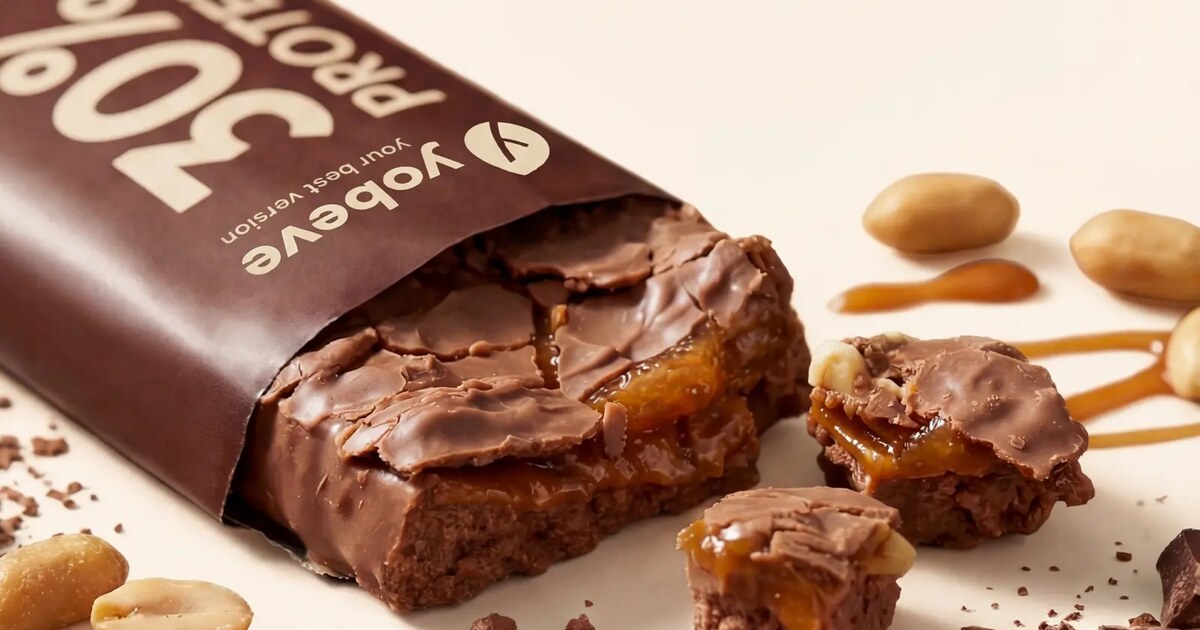
Bought a no-added-sugar chocolate or protein bar and spotted “maltitol” on the back? Maltitol is a sweetener in the polyol family, also called sugar alcohols. Despite the name, it does not contain the type of alcohol found in alcoholic drinks. FDA: sugar alcohols
It helps sweeten foods such as chocolate, biscuits, and bars. To understand the snack you are buying, read it alongside the serving size, calories, sugars, and other ingredients. Here is what each part of the label can tell you.
What does maltitol do in chocolate and snack bars?
Polyols provide sweetness and can contribute bulk, texture, or moisture retention. Replacing sugar in a recipe therefore involves more than matching sweetness. The structure of a chocolate coating and its texture during eating are also part of the formulation. FDA: functions of sugar alcohols
Maltitol does not mean “no calories.” A food made with a sweetener can still contain energy from fat, protein, and carbohydrates in other ingredients. Use the calorie declaration for the finished product instead of estimating its energy from one ingredient's name.
Four label details that answer different questions
| Label detail | What it tells you | A useful reminder |
|---|
| Maltitol in the ingredients | The recipe uses that sweetener | The precise grams of maltitol in a serving |
| Total sugars | The declared sugar amount | The full carbohydrate amount |
| Polyols | The declared polyol amount | That every gram is maltitol |
| No added sugar | A claim about added sugar | That the product has no total sugars or calories |
The FDA distinguishes sugars naturally present in ingredients from those added during processing. Label layouts and terms vary by market, so read the label on the actual product you are buying. FDA: total and added sugars
For the specific packaging claim, read our no-added-sugar label guide.
A worked example from Yobeve's labels
These declarations are for one 50 g bar, not 100 g:
| Nutrient | Chocolate Caramel | Coconut |
|---|
| Energy | 205 kcal | 205 kcal |
| Protein | 15 g | 18.5 g |
| Carbohydrate | 16.5 g | 14 g |
| Of which sugars | 2.1 g | 2.0 g |
| Of which polyols | 7.5 g | 6 g |
Compare the Chocolate Caramel label and Coconut label. Both ingredient lists include maltitol and glycerol. Because the nutrition declaration does not break down each polyol, the 7.5 g and 6 g totals should not be described as exact maltitol quantities.
Notice that both bars still have sugars and calories. The no-added-sugar claim, the sugars row, and the energy figure answer different questions; reading them together gives you a clearer picture of the snack.
When packs differ in size, compare them on the same basis. Per-100-g figures help compare formulations; figures for the portion you actually eat help plan a snack. Do not compare one brand's per-bar numbers with another brand's per-100-g numbers.
Read the actual ingredient panels
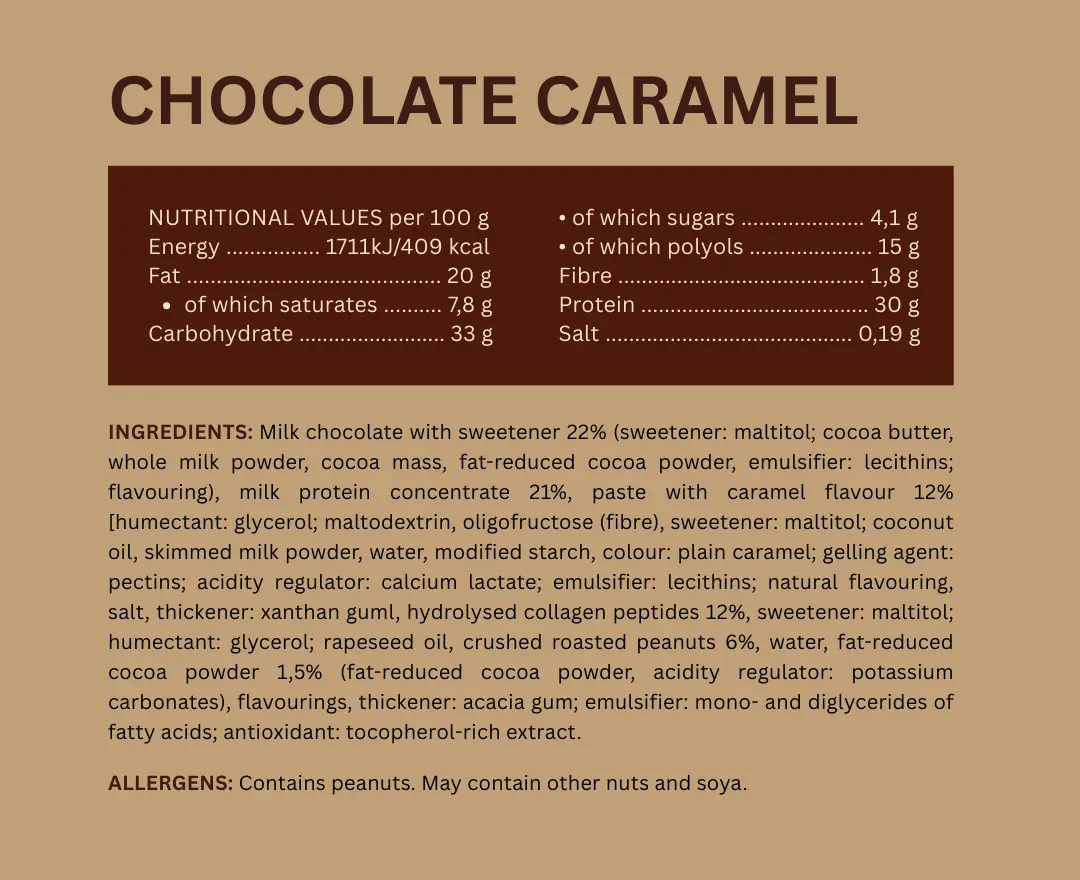
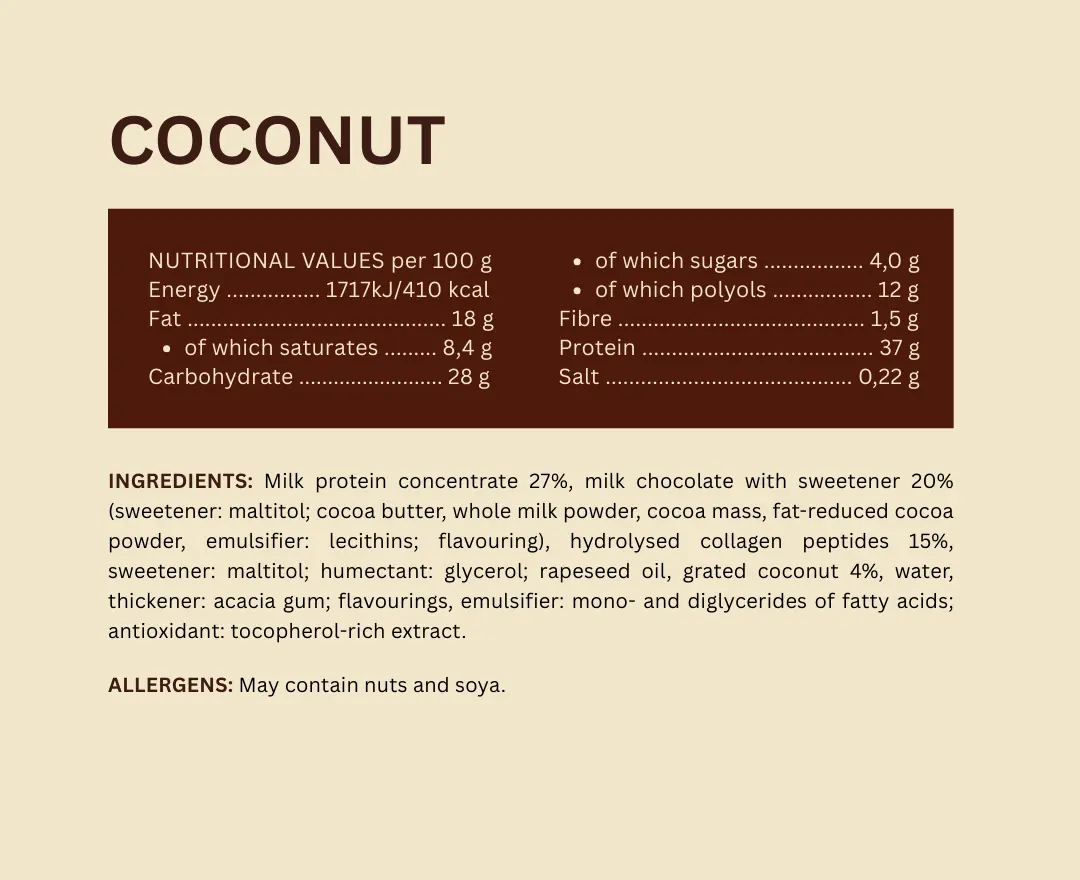
These panels show per-100-g values. The table above divides them by two for one 50 g bar. Always check the pack you receive for its current ingredient and allergen declaration.
Why is there a laxative-effect warning?
Polyols can cause gas, bloating, or diarrhea in some people. Tolerance varies, and polyols from several foods eaten during the day also matter. The FDA and Health Canada explain these possible digestive effects. FDA, Health Canada
Yobeve's label notes that excessive consumption may produce laxative effects. Follow the product directions and pay attention to your response, especially if you also eat sweets, chocolate, or other foods containing polyols. A fixed number of bars cannot describe everyone's tolerance.
If digestive symptoms recur, speak with a healthcare professional rather than relying only on swapping sweeteners.
A quick shopping check
- Find the serving size: one bar, one piece, or the whole pack?
- Read the ingredients: identify maltitol and other sweeteners.
- Check energy, sugars, and polyols: go beyond the front-of-pack claim.
- Check allergens: the sweetener does not tell you whether a product contains milk, peanuts, or another allergen.
- Consider the occasion: a desk snack may be a different choice from something you want just before training.
Our guide to choosing protein bars puts sweetener information alongside protein, energy, and serving size.
Common questions
Is maltitol the same as ordinary white sugar?
No. Maltitol is a polyol, while ordinary white sugar is principally sucrose. That distinction still leaves you with the job of checking the whole food's nutrition label. FDA: types of sweeteners
Does maltitol make a product suitable for every diet?
Check the full product and your own dietary needs. A bar containing maltitol may also contain milk, nuts, collagen, and other ingredients that matter to you. If you follow a medical diet, ask your clinician or dietitian about the complete product.
Why are carbohydrate and polyols shown separately?
The separate rows add detail to the nutrition declaration. On the Yobeve labels above, polyols are presented within carbohydrate; they are not an extra amount to add to the carbohydrate total a second time.