"Protein bar", "nutrition bar", and "energy bar" are often used as if they mean the same thing. Although they share a shape, their purpose, protein content, sugar, and ingredients can be very different.
What is a protein bar?
A protein bar is a packaged food designed to provide a meaningful amount of protein in a compact serving. The amount and source of protein vary widely, so the nutrition panel and ingredient list matter more than the wording on the front of the pack.
Protein bars vs energy bars
Energy bars usually focus on readily available carbohydrates or combinations of oats, dried fruit, nuts, and binders. They can be useful around prolonged activity, but they are not always high in protein.
Protein bars focus more on protein. A good protein bar should clearly tell you how much protein it contains, what protein source it uses, whether it has added sugar, and how the overall calories fit your goal.
| Bar type | Main purpose | Best use |
|---|
| Protein bar | Add protein to a snack | Office, post-workout, between meals |
| Energy bar | Quick calories | Long walks, cycling, outdoor activity |
| Granola or nut bar | Convenient snack | Useful, but check sugar and protein |
| Regular sweet snack | Taste and convenience | Not a reliable protein source |
Why the label matters more than the shape
A nut bar is not automatically high in protein, and a lower-calorie bar is not automatically the right choice for your goal. Packaging can suggest a purpose, but only the nutrition panel shows the protein, sugar, energy, and serving size you will actually get.
How to choose a protein bar
Read the label in this order:
- Protein: Does the amount per bar fit your intended snack?
- Added sugar: If you are managing sugar, read the no-added-sugar claim alongside total sugars and sweeteners.
- Total calories: Does it fit a snack, or is it closer to a small meal?
- Ingredients: Check protein source, fats, fiber, and sweeteners.
- Taste: If you dislike it, you will not keep the habit.
Where Yobeve fits
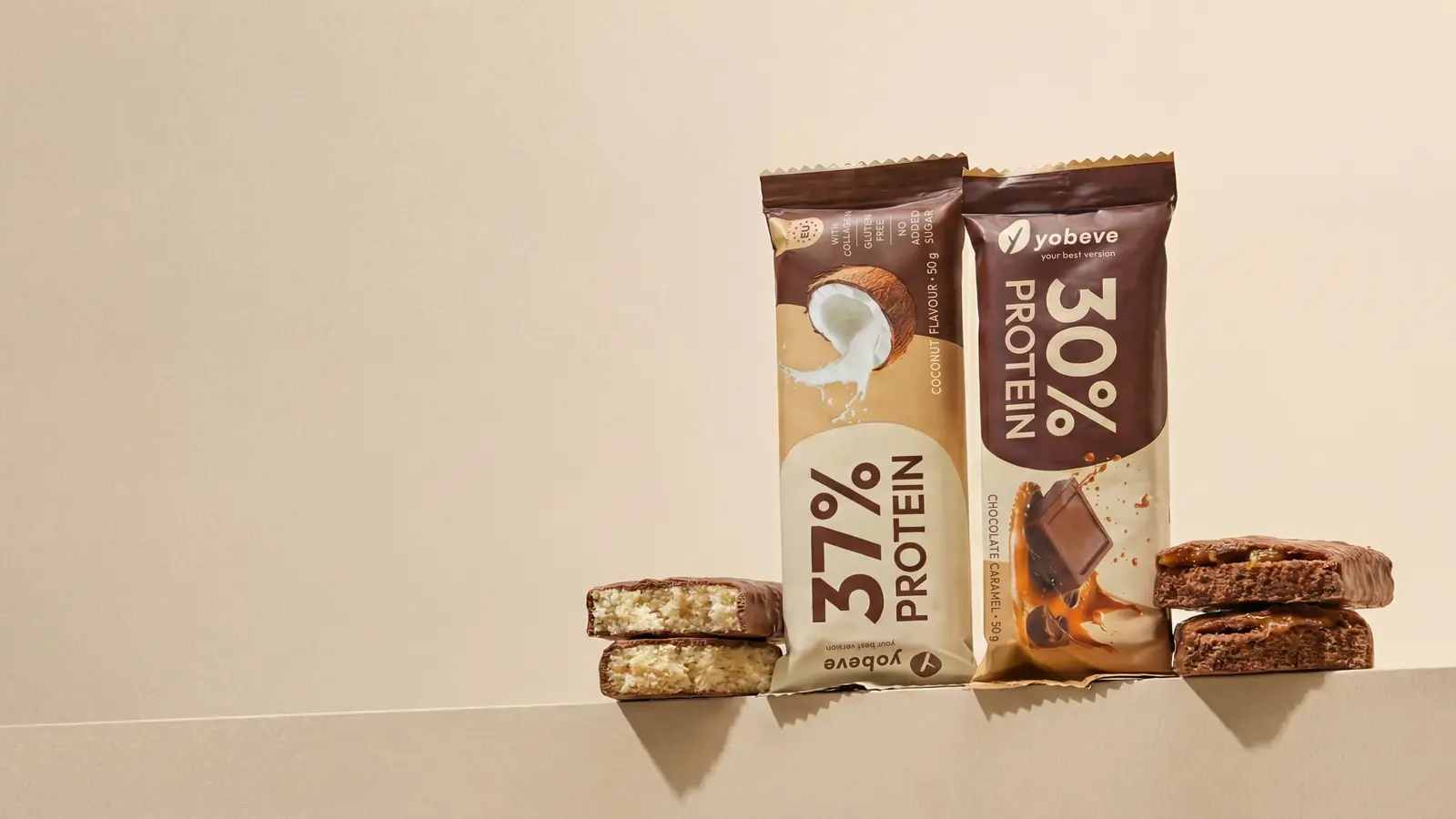
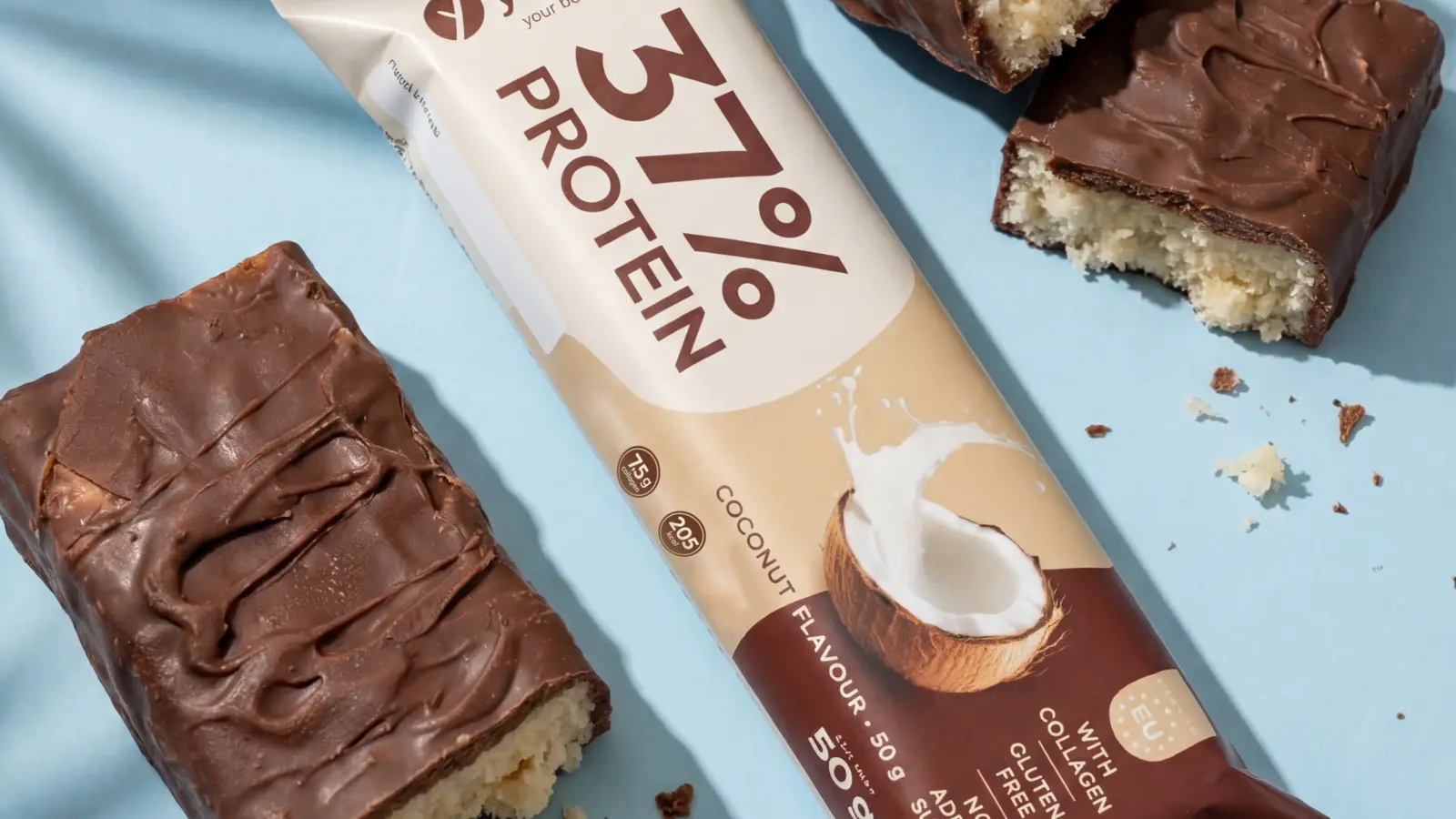
Yobeve sits in the soft, coated protein-bar category. Each 50 g bar contains 205 kcal and provides 15 g of protein in Chocolate Caramel or 18.5 g in Coconut. Milk protein concentrate (MPC) is the main protein ingredient, supported by hydrolyzed collagen; both flavors have no added sugar and are produced in Slovakia, European Union. Chocolate Caramel Protein Bar has a rich chocolate-caramel profile, while Coconut Protein Bar has a tropical coconut profile.
A protein bar is most useful as a portioned snack at the office, on the way to the gym, while traveling, or whenever you want a clearly stated amount of protein between meals.
Bottom line
Choose based on the job you need the snack to do. An energy bar may suit prolonged activity when carbohydrates are the priority; a protein bar suits a snack that needs to contribute meaningful protein. In either case, let the complete label—not the product name alone—guide the choice.